Case Study: Managing Volkswagen's Performance Desk
How strategic management integrated data, planning, and performance to optimize the national campaigns of one of the world's largest automakers.
Technical Details
1. The Challenge: Strategic Orchestration on Multiple Fronts
In my role as Media Strategy Lead for Volkswagen's operations, the central challenge was to ensure the strategic orchestration of a complex and multifaceted media operation. The complexity manifested in two workstreams that occurred simultaneously:"Always On" Campaigns: A full-funnel structure, active 24/7, focused on search and in-market audiences to generate continuous demand for retail.
Product Campaigns: Vertical, high-impact actions designed for the launch and ongoing support of specific models, with greater emphasis on the awareness phase and capturing new audiences.
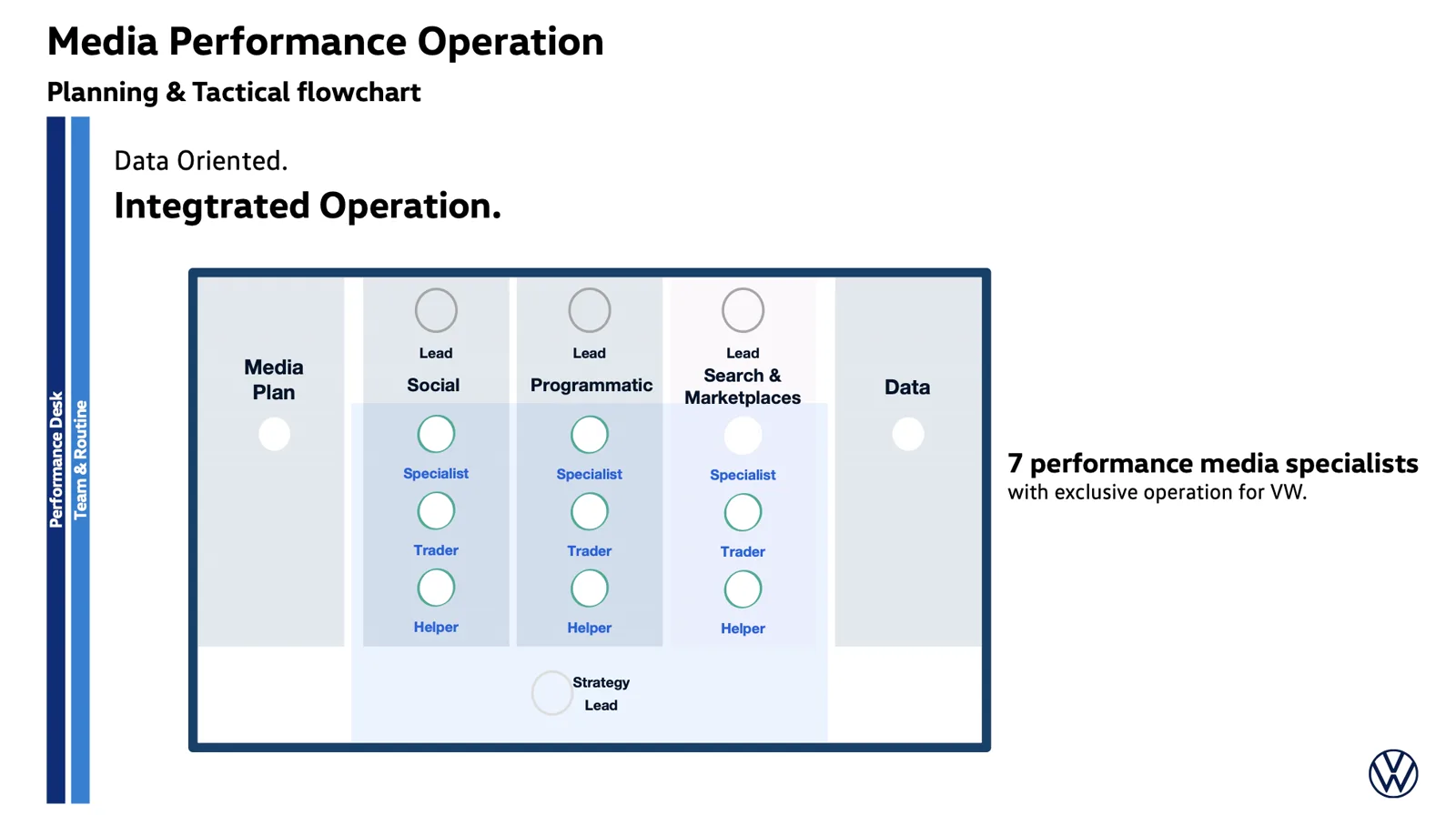
My role was to ensure that these two fronts operated in perfect harmony, aligned with business objectives, and executed with excellence by a robust team of dedicated specialists, organized into Social, Programmatic, and Search & Marketplaces pillars, and supported by Media Planning and Data teams.
2. The Methodology: The Media Performance Operation Ecosystem
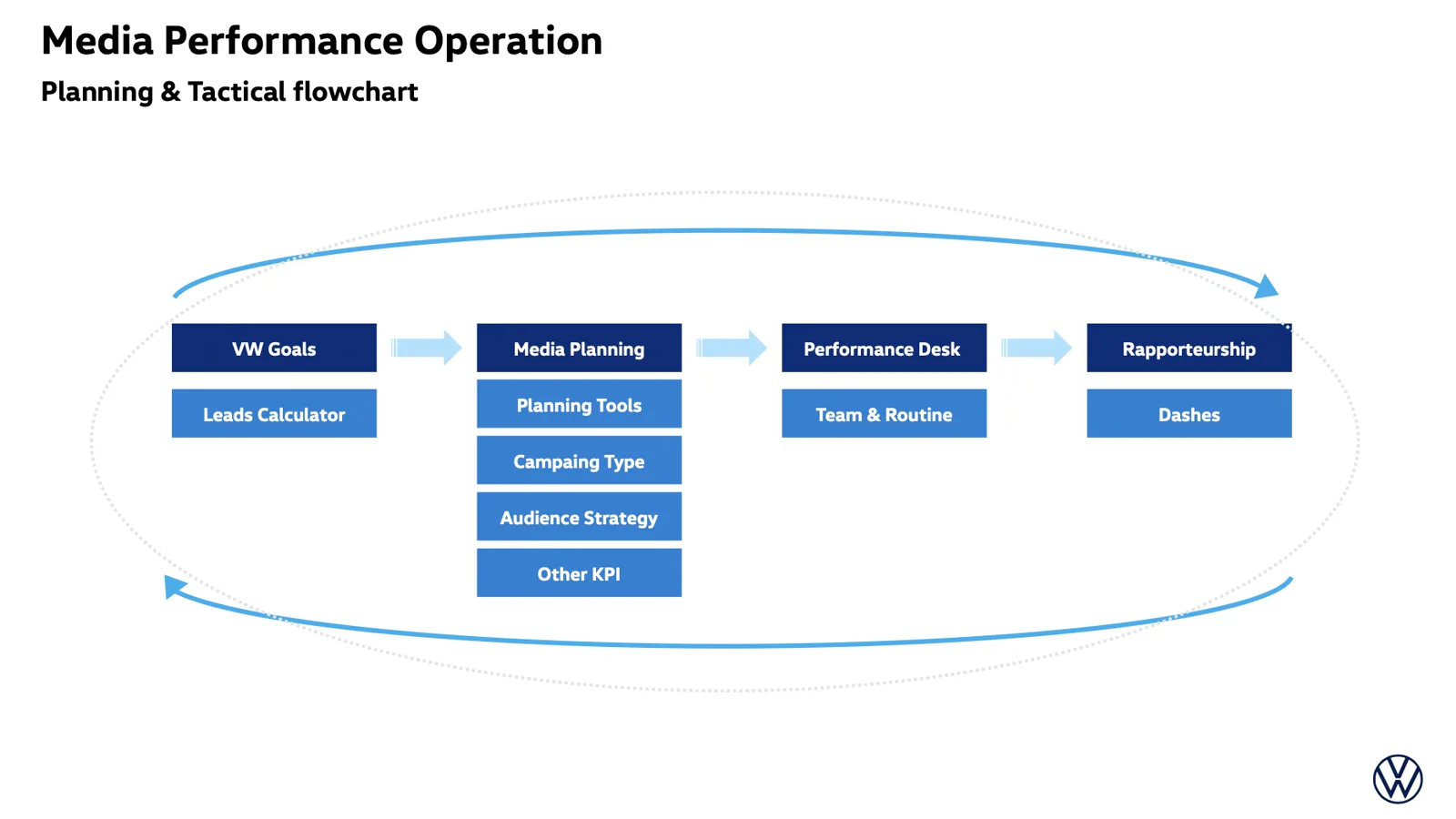
To manage this complexity, the operation was guided by a cyclical and integrated work ecosystem, which ensured that business objectives were translated into effective and measurable media actions.The process followed a continuous flow:
VW Goals: Everything began with Volkswagen's business objectives, translated into clear lead generation goals, calculated per model.
Media Planning: Based on the goals, the planning team defined strategic inputs, such as campaign type (Always On or Product), audience strategy for each funnel stage, and supporting KPIs.
Performance Desk: This was the engine of the operation, where the team and management routine came into action to execute plans, optimize campaigns, and ensure delivery pace.
Rapporteurship (Analysis and Reporting): Through dashboards, results were measured and analyzed, generating insights that fed back into planning and goal tracking (VW Goals), closing the cycle of learning and optimization.
3. The Continuous Optimization Process
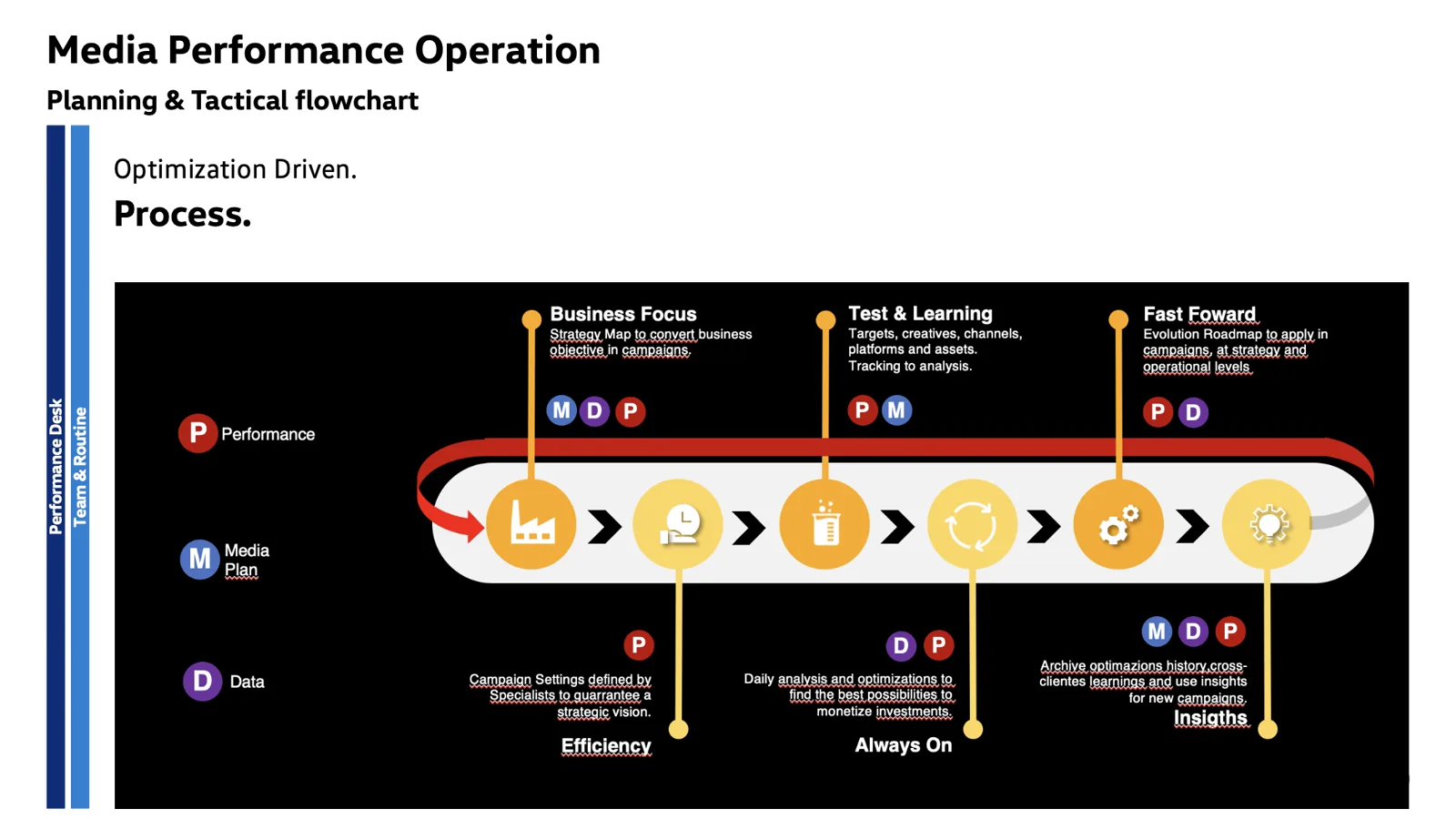
At the heart of Performance Desk, we operated a continuous optimization process, focused on ensuring constant improvement of results. This process was divided into three dynamic phases:Business Focus: Where the strategic map was used to convert business objectives into campaigns with clear goals.
Test & Learning: The phase of continuous experimentation, where we tested and analyzed targets, creatives, channels, and platforms.
Fast Forward: Where the learning from tests was consolidated into an "Evolution Roadmap" to be applied in future campaigns, ensuring that the operation was always evolving.
Within this cycle, the interaction between the Media Plan, Data, and Performance teams was constant, focusing on Efficiency (settings definition), Always On (daily optimizations), and Insights (archiving learnings).
4. The Audience Strategy and Operations in Practice
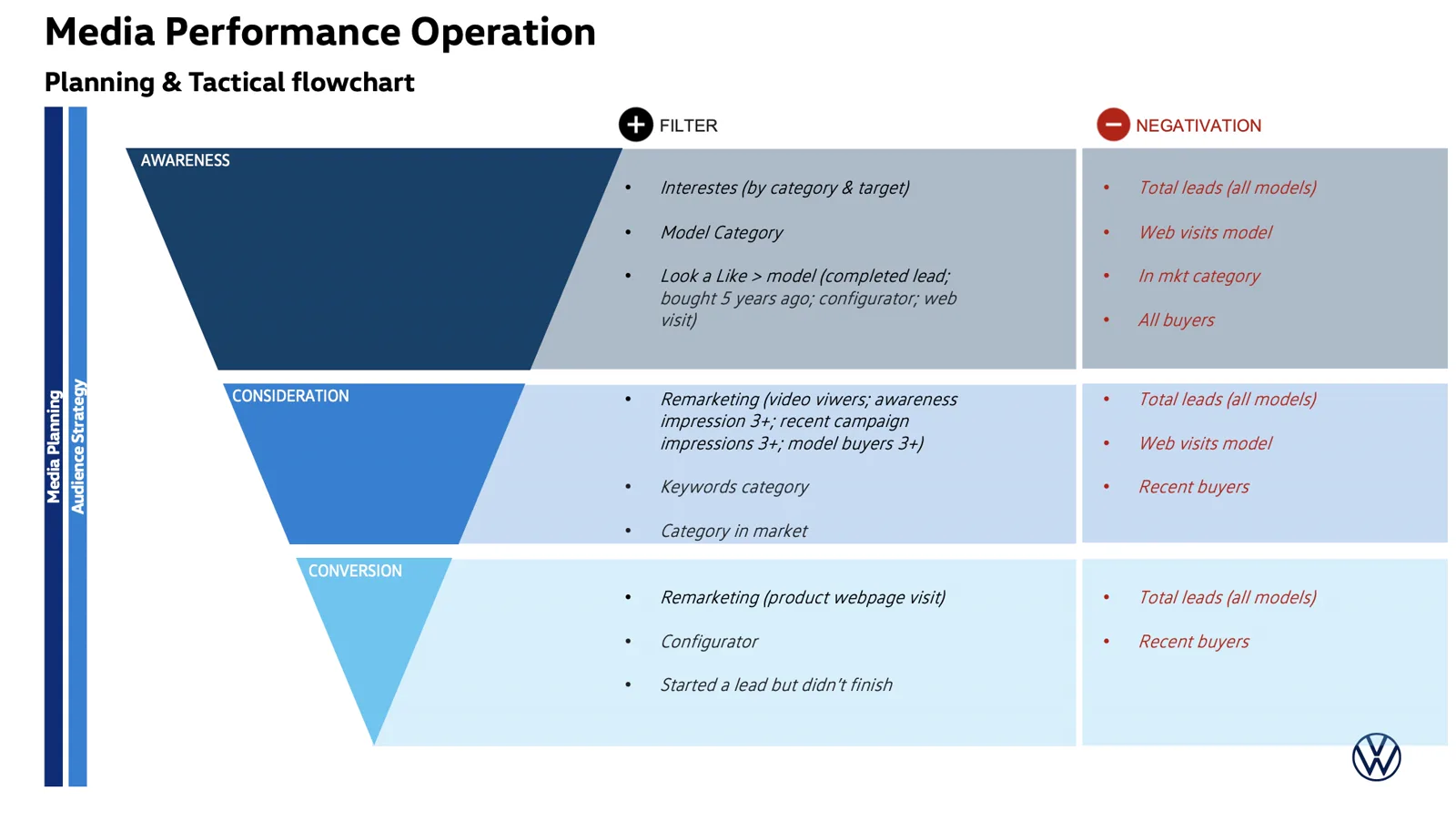
One of the pillars of Media Planning was the sophisticated audience strategy, which segmented the public at each stage of the journey:Awareness: Focus on interests, model categories, and high-qualification Look-a-Like audiences (e.g., past buyers, configurator visitors).
Consideration: Activation of video remarketing audiences, keywords, and market categories.
Conversion: Aggressive remarketing to users who visited product pages, used the configurator, or started a lead without finalizing.
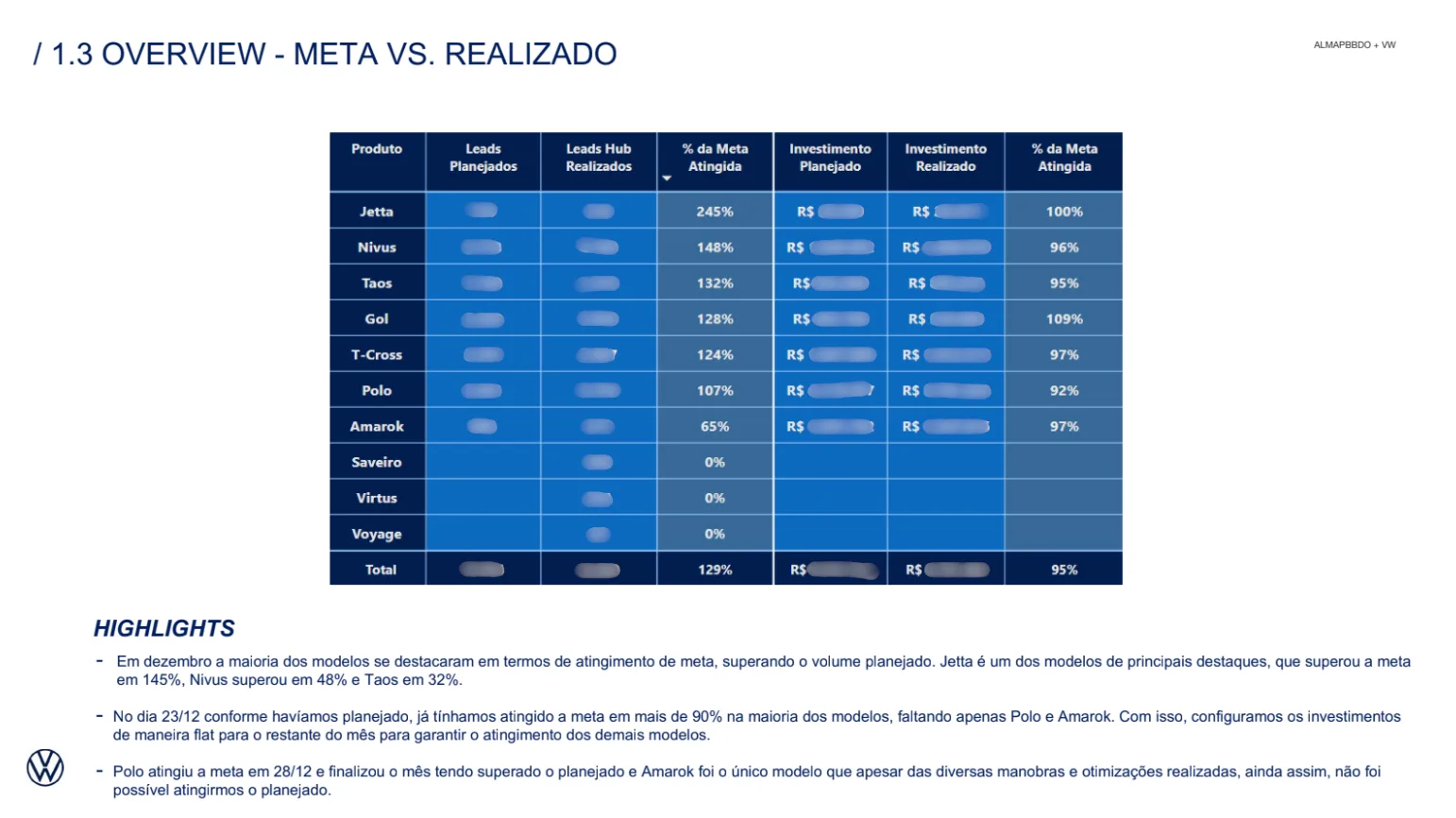
This strategy was put to test in December. As the monthly report shows, even in a challenging month, the operation generated 16,860 leads, exceeding the goal by 29%.
The optimization of the Polo campaign, which involved the use of qualified remarketing and investment adjustments discussed at the Table, is a practical example of how this structure transformed strategy into results.
5. Tools, Intelligence, and Strategic Impact
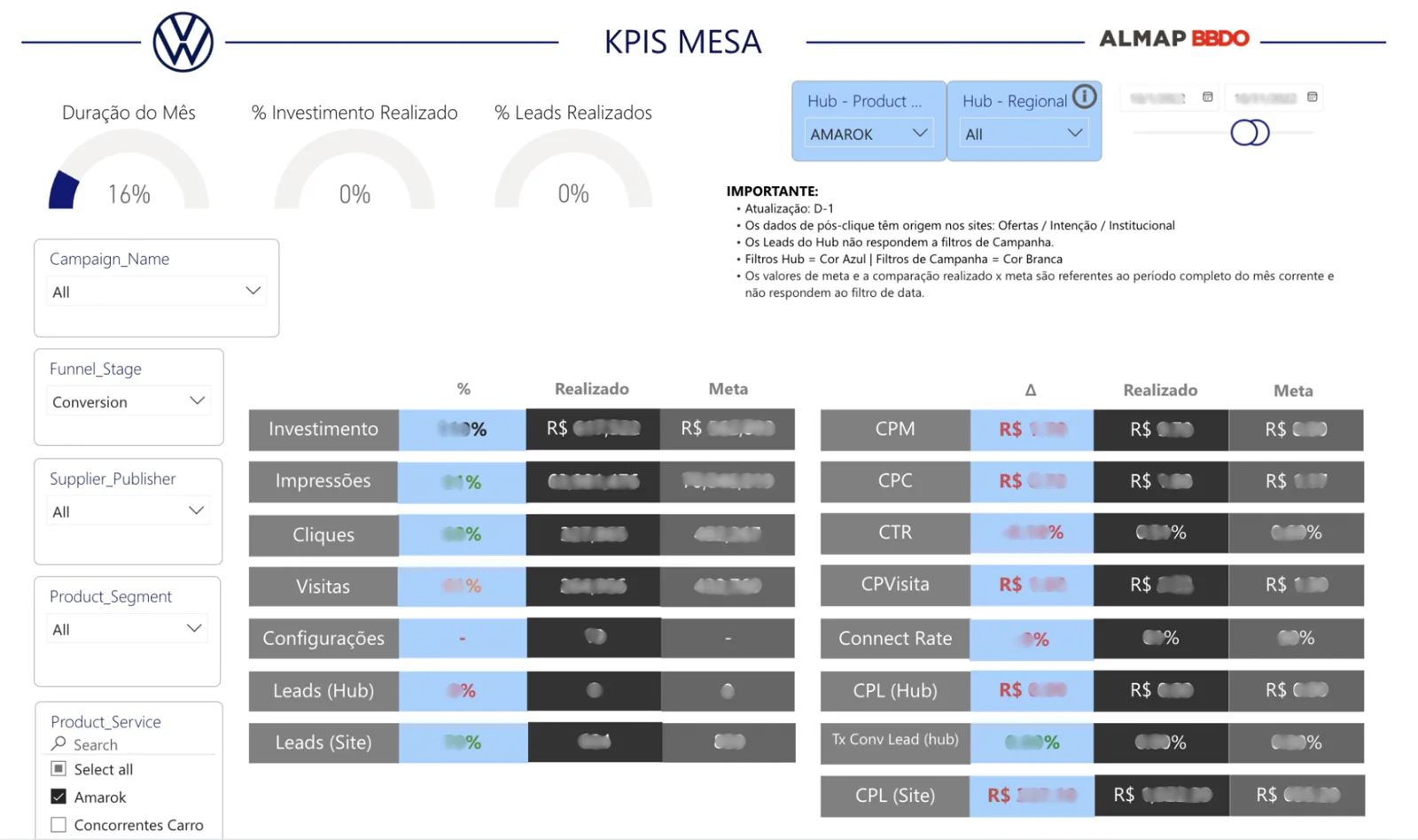
The Performance Desk's agility was fully supported by a robust BI structure, centered around a comprehensive dashboard that allowed for real-time data exploration. This tool was key to the Rapporteuship phase, enabling quick diagnoses and productive discussions.The strategic impact of this integrated operation was clear:
- Agility and Rapid Response: Ability to react to challenges and optimize campaigns in real-time.
- Visibility and Alignment: A single source of truth that aligned all teams and stakeholders.
- Portfolio Intelligence: Deep understanding of optimization levers for each vehicle model.
- Predictability and Control: A management routine that transformed a complex operation into a system focused on consistently achieving goals.